Benefits of Daily Word Puzzles for Brain Health and Cognition
Why Word Puzzles Are Different From Other Brain Games
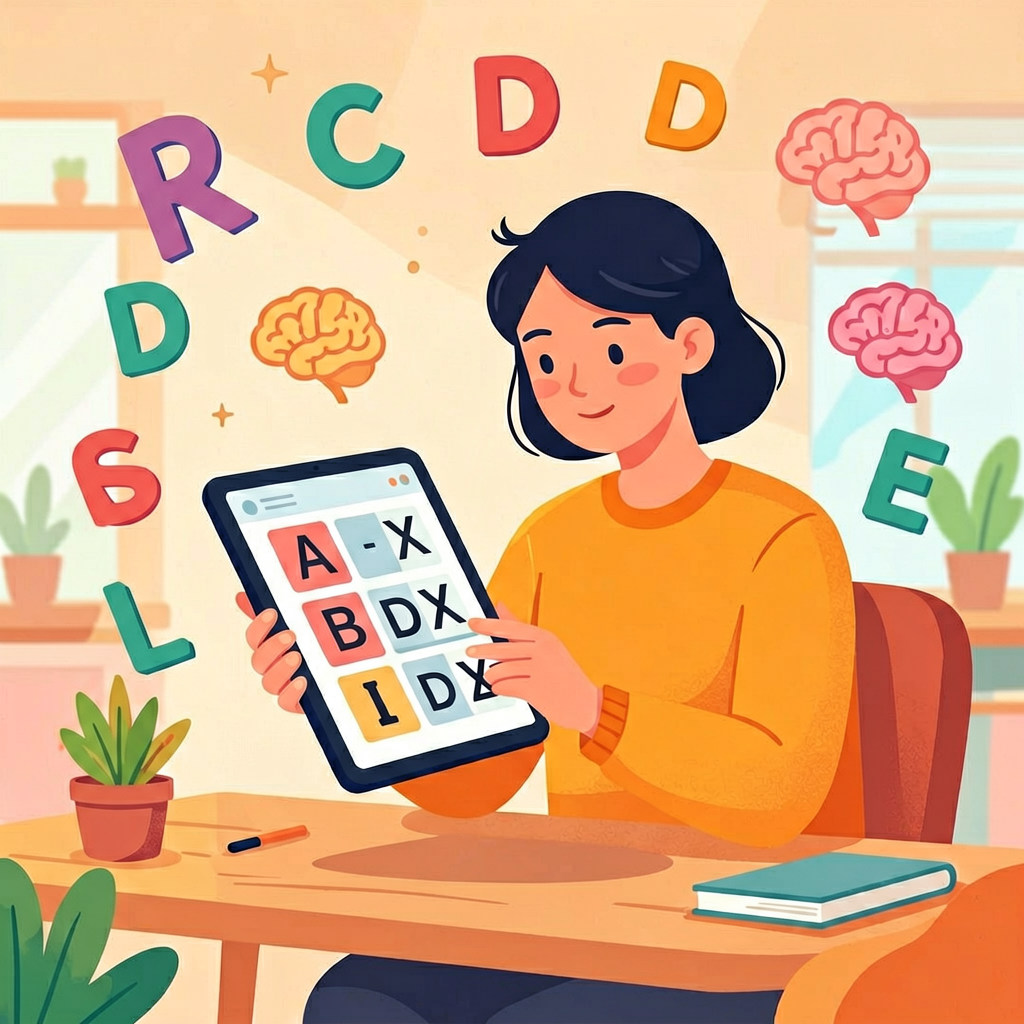
Not all brain training activities are created equal. While Sudoku and logic puzzles excel at developing spatial reasoning and numerical fluency, word puzzles specifically engage the linguistic centers of the brain — areas responsible for language processing, memory retrieval, and semantic association. When you search for a four-letter word that fits a pattern, your brain activates neural pathways connected to your lexicon, forces rapid retrieval from long-term memory, and rewards successful connections with a dopamine hit. This cycle of challenge, retrieval, and reward is precisely what strengthens cognitive resilience over time.
Research published in the journal Neuropsychology, Development, and Cognition found that adults who engaged in regular verbal fluency tasks showed measurable improvements in processing speed and working memory capacity. Word puzzles naturally incorporate verbal fluency demands: you must rapidly generate candidates, evaluate them against constraints, and eliminate incorrect options. This continuous mental workout builds what cognitive scientists call “cognitive reserve” — a buffer that helps protect the brain against aging and neurodegenerative conditions.
Vocabulary Expansion Happens Naturally
One of the most immediate and tangible benefits of daily word puzzle play is vocabulary growth. Unlike rote memorization techniques, word puzzles introduce new words in context. When you encounter an unfamiliar letter combination or realize that a five-letter word ending in “IGHT” could be “EIGHT,” “LIGHT,” “SIGHT,” or “FIGHT,” your brain is actively exploring the landscape of known words and discovering relationships between them. This process of pattern recognition and elimination is a form of implicit learning that sticks far better than flashcard drilling.
Many players report that their everyday vocabulary expands organically. You begin noticing word structures in books, conversations, and even advertising copy. The mental muscle you build through daily practice — the ability to quickly scan letter combinations and retrieve candidate words — transfers to reading comprehension, writing clarity, and conversational fluency. Free word search puzzles and mini crossword formats are particularly effective for this, as they expose players to a wider variety of word lengths and structures than the constrained five-letter format of Wordle.
Social Connection and Mental Well-being
Word puzzles have evolved from solitary activities into shared experiences. The daily ritual of sharing your Wordle results on social media, debating the difficulty of a particular puzzle, or challenging friends to a head-to-head word game creates micro-moments of social connection. These small interactions combat isolation — a significant risk factor for cognitive decline in older adults — while keeping the brain engaged in language-rich environments.
The community aspect also introduces healthy competition and motivation. When you know friends are playing the same puzzle at the same time, you are more likely to maintain the daily habit. Consistency matters enormously in cognitive training: sporadic brain exercises produce minimal benefits, whereas daily engagement builds cumulative gains. Platforms like WordleLike make it easy to access a variety of word puzzles for free, ensuring that players never run out of fresh challenges and can rotate between formats to keep their brains guessing.
Protecting Against Age-Related Cognitive Decline
Perhaps the most compelling reason to adopt a daily word puzzle habit is its potential protective effect against dementia and Alzheimer’s disease. A landmark study conducted at Rush University Medical Center followed nearly 1,000 older adults for an average of six years and found that those who engaged in regular mentally stimulating activities — including crossword puzzles, word games, and reading — experienced a significantly slower rate of cognitive decline compared to those who did not.
The key insight is that it is never too late to start, and it is never too early. While the protective effects are most dramatic in older populations, establishing a word puzzle routine in your twenties or thirties builds cognitive reserve that pays dividends decades later. Think of it as retirement planning for your brain: small, consistent investments today compound into substantial mental fitness tomorrow.
How to Build a Sustainable Daily Habit
Getting started with daily word puzzles is straightforward, but maintaining the habit requires a bit of strategy. Here are evidence-based tips for making word puzzles a lasting part of your routine:
Choose a consistent time slot. Pair your puzzle with an existing habit — morning coffee, lunch break, or evening wind-down. Habit stacking leverages the neurological momentum of routines you already perform automatically, making the new behavior stick with minimal willpower.
Rotate between formats. Playing the same puzzle type every day leads to adaptation and diminished returns. Alternate between anagram solvers, word searches, crosswords, and letter-guessing games. This variety forces your brain to recruit different cognitive strategies, maximizing the breadth of mental stimulation.
Don’t rush the clock. While some platforms impose time limits, resist the urge to race. The cognitive benefits come from deep, deliberate engagement with the puzzle, not from speed. Take the time to consider multiple possibilities, explore letter combinations, and savor the moment of discovery.
Track your streak. Many word puzzle apps display current streak counts, and there is psychological power in not breaking the chain. Even if you miss a day, returning the next day without guilt is more productive than letting a single miss become a pattern of abandonment.
Getting Started Today
If you have not yet incorporated word puzzles into your daily routine, there has never been a better time. The internet offers countless free online word puzzles that require no downloads, subscriptions, or accounts. Whether you prefer the minimalist elegance of a five-letter guessing game, the open-ended exploration of a word search, or the structured challenge of a mini crossword, there is a format that matches your taste.
Visit WordleLike to explore a curated collection of free word puzzles designed for daily play. From daily word challenges to themed puzzle sets, the site makes it easy to find fresh content every day without hunting across multiple platforms.
The Bottom Line
Daily word puzzles are among the simplest, most accessible, and most scientifically supported habits for improving brain health and cognition. They expand vocabulary, strengthen neural connections, foster social bonding, and potentially protect against age-related decline — all for the cost of five to ten minutes a day. In a world obsessed with complex wellness regimens and expensive supplements, sometimes the best investment you can make for your mind is as simple as guessing a few more letters.
Start today. Your brain will thank you tomorrow.


评论
发表评论